
CQ-9, Canada’s Journey Towards a Mixed Crewed/Uncrewed Fleet Begins
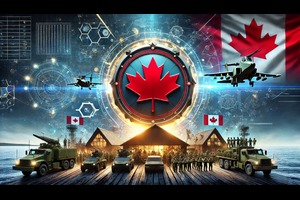
Canada stands at a pivotal moment in its defence evolution. With the induction of the MQ-9B SkyGuardian from the United States, the Royal Canadian Air Force (RCAF) is finally entering the era of long-endurance, remotely piloted aircraft systems (RPAS). This acquisition is more than a procurement decision,it is a strategic signal that Canada recognizes the future of airpower is hybrid, blending crewed and uncrewed platforms into a single, integrated force.
But the MQ-9B should not be the end of the story. It should be the beginning.
The time has arrived for Canada to launch its own indigenous drone development program, one that starts with light and medium-class drones in the short term and matures into a heavy, long-endurance, optionally armed platform in the long term. The engineering talent exists. The industrial base exists. The strategic need is undeniable. What Canada requires now is the vision and political will to build a sovereign drone ecosystem that strengthens national security, fuels aerospace innovation, and positions the country as a global contributor to next-generation airpower.
The introduction of the MQ-9B is the spark. The CQ-9B, Canada’s conceptual indigenous successor,should be the flame.
1. Why Canada Needs Its Own Drone Program
A. Strategic Autonomy in a Changing World
The global security environment is shifting rapidly. Drones are no longer niche assets—they are central to modern warfare, border security, Arctic surveillance, and disaster response. Nations that rely entirely on foreign suppliers for critical defence technologies face limitations:
- Export controls
- Restricted payload options
- Limited software access
- Vulnerability to geopolitical shifts
- Inability to customize platforms for unique national needs
Canada’s geography alone demands autonomy. With the world’s second-largest landmass, the longest coastline, and a rapidly evolving Arctic, Canada cannot depend solely on foreign systems to monitor and protect its territory.
B. The Arctic: Canada’s Strategic Blind Spot
The Arctic is warming, opening new sea routes and attracting global interest. Russia has already deployed advanced drones and Arctic-optimized aircraft. China calls itself a “near-Arctic state” and is expanding polar research and maritime presence.
Canada must respond with persistent surveillance capabilities, something only long-endurance drones can provide.
C. Economic and Industrial Benefits
An indigenous drone program would:
- Create high-skilled aerospace jobs
- Strengthen domestic supply chains
- Reduce long-term procurement costs
- Position Canada as an exporter of RPAS technology
- Stimulate innovation in AI, sensors, propulsion, and composites
Canada already has world-class aerospace firms. What’s missing is a unifying national program.
2. The Industrial Base Already Exists
Canada is not starting from zero. The country has a deep, sophisticated aerospace ecosystem capable of designing, manufacturing, and supporting advanced air systems.
Bombardier Aerospace
A global leader in business jets, composites, avionics, and systems integration. Bombardier has the engineering depth to design airframes, wings, and propulsion systems for medium and heavy drones.
Magellan Aerospace
A major supplier of structural components, engine parts, and space systems. Magellan’s experience with precision manufacturing and defence programs makes it a natural partner for drone development.
CAE
A world leader in simulation, training, and mission systems. CAE could develop the ground control stations, training pipelines, and synthetic environments for drone operators.
L3Harris Canada
Specializes in ISR (Intelligence, Surveillance, Reconnaissance) systems, sensors, and mission integration, critical components for any drone platform.
MDA
Canada’s space and robotics champion. MDA’s radar, satellite, and sensor technologies could be integrated into drones for Arctic surveillance and maritime domain awareness.
Pratt & Whitney Canada
A global leader in small and medium turbine engines. Perfect for powering medium-class drones.
Canadian SMEs
Dozens of smaller firms specialize in composites, AI, autonomy, and avionics—ideal for building a distributed supply chain.
Canada has the talent. Canada has the companies. Canada has the need.
What Canada requires now is a flagship program to bring these capabilities together.
3. Introducing the CQ-9B: Canada’s Indigenous Drone Vision
The MQ-9B SkyGuardian is an excellent platform, but it is American-designed, American-controlled, and American-optimized. Canada needs a drone tailored to its own geography, climate, and mission requirements.
The CQ-9B, a conceptual Canadian-developed platform—could represent the next step.
A. Short-Term Goal: Light and Medium Drones
Canada should begin with achievable, high-impact platforms:
1. Light Tactical Drones
- Range: 50–200 km
- Payload: EO/IR sensors
- Missions: Border patrol, wildfire monitoring, search and rescue
These drones can be developed quickly and deployed across provinces.
2. Medium-Class Drones
- Range: 1,000–3,000 km
- Endurance: 12–24 hours
- Payload: Maritime radar, AIS receivers, SAR sensors
- Missions: Arctic patrol, coastal surveillance, fisheries enforcement
This class would be the backbone of Canada’s domestic surveillance fleet.
B. Long-Term Goal: Heavy, Long-Endurance, Armed Drones
The CQ-9B would be Canada’s answer to the MQ-9B:
- Endurance: 30–40 hours
- Range: 5,000+ km
- Payload: Multi-mode radar, SIGINT, EO/IR, satellite comms
- Optional armament: Precision-guided munitions
- Arctic-optimized de-icing and cold-weather systems
- Ability to operate from remote northern airfields
This drone would be designed for:
- Arctic sovereignty
- NORAD modernization
- Maritime domain awareness
- Support to NATO missions
- Domestic emergency response
A Canadian-built heavy drone would give the RCAF a sovereign capability that aligns with national priorities.
4. A Mixed Crewed/Uncrewed Fleet: The Future of the RCAF
The introduction of the MQ-9B marks the beginning of a new era. The RCAF is moving toward a hybrid fleet where crewed and uncrewed aircraft operate together.
A. Why a Mixed Fleet Matters
- Cost Efficiency
Drones can perform long-endurance missions at a fraction of the cost of crewed aircraft.
- Risk Reduction
Uncrewed systems can operate in dangerous environments without risking pilots.
- Persistent Surveillance
Drones can stay airborne for 24–40 hours, something no crewed aircraft can match.
- Force Multiplication
A single pilot can manage multiple drones, expanding Canada’s operational reach.
B. How the CQ-9B Fits In
The CQ-9B would complement existing RCAF assets:
- CP-140 Aurora replacement
Drones can handle persistent surveillance while crewed aircraft focus on complex missions.
- Fighter support
Drones can act as ISR scouts, electronic warfare platforms, or decoys.
- Arctic patrol
Drones can maintain constant presence while crewed aircraft respond to threats.
- Disaster response
Drones can map wildfires, floods, and storms in real time.
A mixed fleet is not a luxury—it is a necessity.
5. Engineering Comes Second, Vision Comes First
One of the biggest misconceptions in defence procurement is that engineering is the hardest part. It isn’t. Canada has the engineers. Canada has the aerospace firms. Canada has the research institutions.
What Canada needs is strategic direction.
Countries that succeed in drone development, Turkey, Israel, India, South Korea—did not start with perfect engineering. They started with a national decision:
“We will build our own drones.”
Once that decision is made, engineering follows.
Canada must adopt the same mindset.
6. A National Drone Strategy for Canada
To make the CQ-9B vision a reality, Canada should launch a national drone strategy built on four pillars:
1. Industrial Collaboration
Bring together Bombardier, Magellan, CAE, MDA, L3Harris, Pratt & Whitney Canada, and SMEs into a unified consortium.
2. Government Investment
A multi-year funding commitment similar to the National Shipbuilding Strategy.
3. Defence Requirements
Clear RCAF specifications for light, medium, and heavy drones.
4. Export Ambition
Design drones not only for Canada but for allied markets.
This strategy would create a sustainable, sovereign drone ecosystem.
7. The CQ-9B as a Symbol of Canadian Capability
The CQ-9B is more than a drone concept, it is a statement:
- Canada can build advanced aerospace systems
- Canada can protect its Arctic
- Canada can contribute meaningfully to NORAD modernization
- Canada can reduce reliance on foreign suppliers
- Canada can lead in next-generation airpower
The MQ-9B SkyGuardian is the first step. The CQ-9B should be the next.
Conclusion: Canada’s Moment Has Arrived
Canada’s induction of the MQ-9B is a milestone, but it should not be the final destination. It should be the catalyst for a sovereign drone program that strengthens national security, fuels industrial innovation, and positions Canada as a leader in the future of airpower.
The world is moving toward mixed crewed/uncrewed fleets. Canada must not be left behind.
With the CQ-9B, Canada can chart its own path, one that reflects its geography, its values, its industrial strengths, and its strategic needs.
The journey begins now.