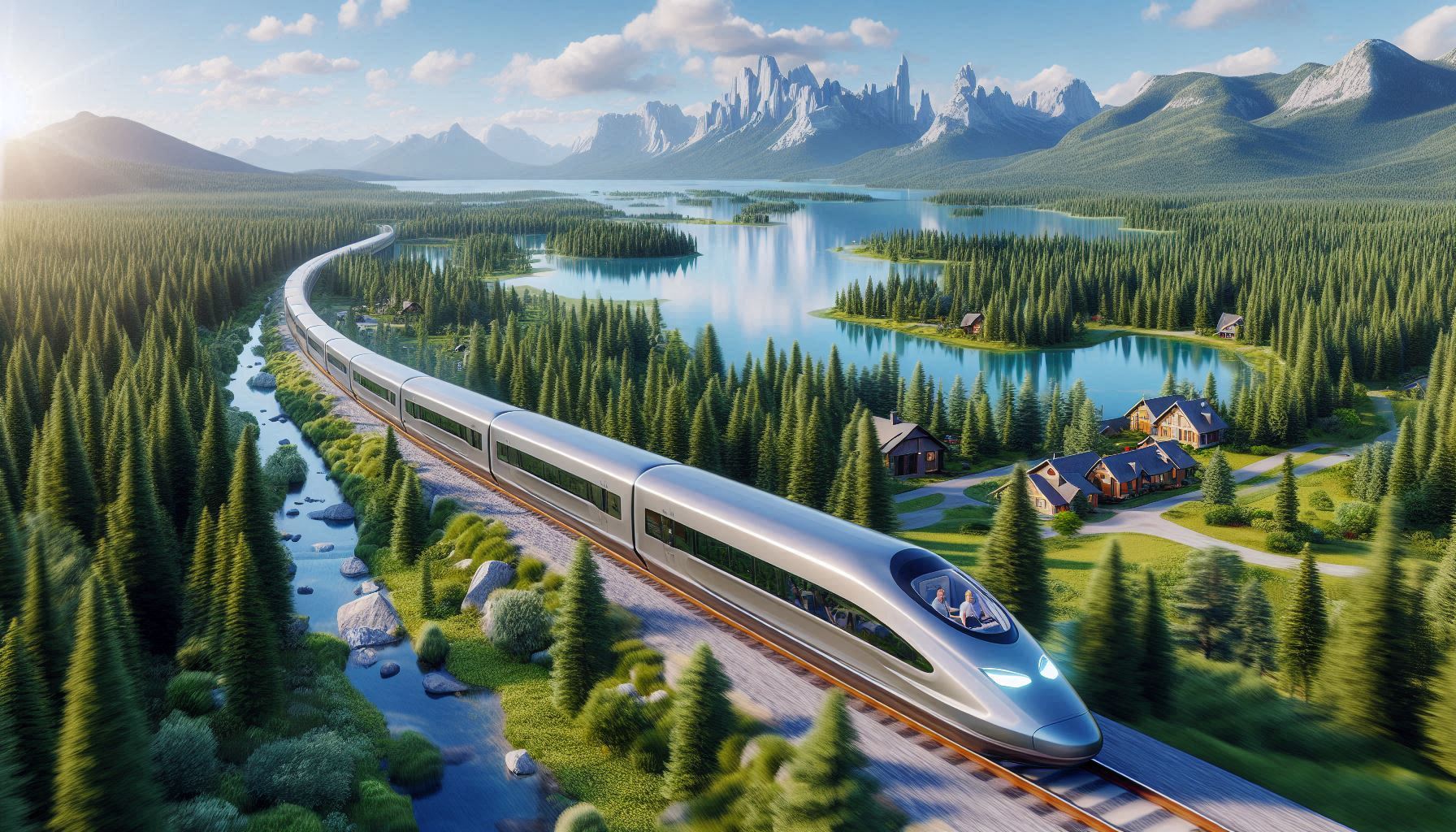
On a frigid January morning in Toronto, the first of Ontario’s new Northlander trainsets rolled quietly into the city’s rail yard, sleek, modern, and almost understated for a project that has carried so much political weight and emotional resonance across Northern Ontario. For many in Timmins, Cochrane, and the constellation of small communities that dot the 740-kilometre corridor to Toronto, the train’s arrival is less a transportation milestone than a symbolic restoration: a recognition that the North matters, and that its residents deserve the same connective tissue that binds the rest of the province together.
The Ontario government, which has spent years promising to restore passenger rail service after its cancellation in 2012, framed the moment as a “major milestone” in its commitment to rebuild the North’s economic and social infrastructure. The new trainsets, three in total will undergo months of testing before the service officially resumes in 2026.
But the deeper story is not about rolling stock or schedules. It is about what happens when a region long treated as peripheral is finally given the tools to participate fully in the province’s economic life. The Northlander’s return is poised to reshape mobility, labour markets, tourism, and the psychology of distance in a part of Ontario that has always been geographically vast but politically small.
A Region Long Defined by Distance
Northern Ontario is a place where distance is not an abstraction. It is lived reality. The drive from Timmins to Toronto can take eight hours in good weather longer in the winter, when snow squalls turn highways into white-knuckled corridors. Bus service is limited, flights are expensive, and for many residents, the cancellation of the original Northlander felt like a severing of the only reliable, year-round link to the south.
The Northlander’s absence was not merely inconvenient; it was isolating. Students heading to universities in the south, seniors traveling for medical appointments, and workers commuting to job sites all felt the strain. The return of the train is therefore not simply a transportation upgrade ,it is a restoration of mobility rights.
The new service will include 16 stops between Timmins and Toronto, with a connection to Cochrane, creating a spine of accessibility that has been missing for more than a decade.
For many communities, the train is the only mode of transportation that is both affordable and resilient in harsh winter conditions. In a region where weather can shut down highways for days, rail is not a luxury ,it is a necessity.
Economic Rebalancing: How a Train Can Shift a Region
1. Workforce Mobility and Labour Market Expansion
Northern Ontario’s labour market has long been constrained by geography. Mines, forestry operations, and emerging clean-tech projects often struggle to attract talent because workers cannot easily move between communities or commute from the south.
A reliable rail link changes that equation.
The Northlander will allow workers to travel more predictably, opening the door for rotational work schedules, hybrid employment arrangements, and broader recruitment pools. Employers in Timmins and Cochrane can tap into talent from North Bay, Muskoka, and even Toronto. Conversely, northern workers gain access to southern job markets without needing to relocate.
This is not theoretical. Regions around the world ,from Scandinavia to Japan, have seen measurable economic uplift when rail connectivity reduces travel friction. The Northlander could become the backbone of a more fluid, integrated provincial labour market.
2. Tourism: A New Gateway to the North
Tourism in Northern Ontario has always been rich in potential but limited by access. Fishing lodges, snowmobile trails, Indigenous cultural experiences, and wilderness parks attract visitors, but reaching them often requires long drives or costly flights.
A modern passenger rail service changes the calculus.
The Northlander’s return creates a new tourism corridor, enabling:
- Weekend trips from Toronto to the North
- Eco-tourism packages built around rail-to-trail experiences
- Indigenous tourism partnerships
- Seasonal festivals and winter tourism
Rail travel itself becomes part of the experience, slow, scenic, and immersive in a way highways are not. For a region seeking to diversify its economy beyond resource extraction, tourism represents a high-value, low-impact growth sector.
3. Supporting Local Industries and Supply Chains
The Ontario government has emphasized that the Northlander is part of its broader strategy to “protect Ontario’s economy by connecting northern communities, creating good-paying jobs, supporting local industries and driving economic growth across the north.”
While the passenger service is the headline, the ripple effects extend into freight, logistics, and regional supply chains. Better passenger infrastructure often leads to complementary investments in rail corridors, sidings, and maintenance facilities ,improvements that benefit mining, forestry, and manufacturing operations.
The Northlander corridor intersects with some of the province’s most strategically important resource zones. Enhanced rail presence can accelerate:
- Mine development timelines
- Movement of skilled trades
- Supply delivery to remote sites
- Regional procurement opportunities
In a province increasingly focused on critical minerals and clean-tech manufacturing, Northern Ontario’s role is only growing. The Northlander strengthens the connective tissue needed to support that growth.
A Social Infrastructure Investment, Not Just a Train
Transportation is often framed in economic terms, but the Northlander’s return carries profound social implications.
1. Healthcare Access
For many northern residents, specialized medical care is available only in Toronto or Sudbury. The train provides a safer, more comfortable, and more predictable option for patients ,especially seniors who cannot endure long drives or afford flights.
2. Education and Youth Retention
Students traveling to universities and colleges in the south gain a reliable, affordable link home. This matters. When young people feel connected to their communities, they are more likely to return after graduation.
3. Reducing Social Isolation
Rail travel fosters connection. It brings families together, supports cultural exchange, and reduces the psychological distance between north and south. In a region where isolation can be acute, the social value of mobility cannot be overstated.
The Politics of Restoration
The Northlander’s return is also a political story ,one shaped by years of advocacy from northern municipalities, Indigenous communities, and residents who refused to accept the loss of their rail service.
The government’s decision to restore the train reflects a broader shift in how Ontario views its northern regions. The North is no longer seen solely as a resource hinterland but as a region with its own economic, cultural, and political agency.
The arrival of the first trainset, currently undergoing testing and commissioning in Toronto ,marks a tangible step toward fulfilling that promise.
But the real test will come after the ribbon-cutting, when the service must prove reliable, frequent, and responsive to community needs.
Modernization and the New Era of Northern Rail
Ontario Northland has emphasized that the new trainsets are designed with “comfort, accessibility and safety top of mind,” offering a modern travel experience that stands in stark contrast to the aging equipment of the past.
Features expected in the new Northlander include:
- Fully accessible cars
- Modern seating and amenities
- Wi-Fi and digital information systems
- Climate-resilient engineering
- Enhanced safety systems
The agency is also building modern passenger shelters along the corridor to create a consistent, accessible experience for travelers.
This modernization is not cosmetic. It signals that the Northlander is not a nostalgic revival but a forward-looking transportation investment aligned with 21st-century expectations.
A Catalyst for Northern Identity and Confidence
Perhaps the most overlooked impact of the Northlander’s return is psychological. For years, northern residents have felt that provincial decisions were made with little regard for their needs. The cancellation of the train in 2012 became a symbol of that neglect.
Its restoration, therefore, is more than a policy reversal, it is a gesture of respect.
The Northlander tells northern communities:
You are not an afterthought. You are part of Ontario’s future.
This matters in a region where population decline, economic uncertainty, and political marginalization have shaped public sentiment. A train cannot solve every challenge, but it can signal that the province is willing to invest in the North’s long-term vitality.
Challenges Ahead
No major infrastructure project is without hurdles. The Northlander will face several:
1. Operational Reliability
Northern winters are unforgiving. Maintaining consistent service will require robust planning, equipment resilience, and contingency protocols.
2. Frequency and Scheduling
A train that runs too infrequently risks becoming symbolic rather than functional. Communities will expect schedules that support commuting, medical travel, and tourism.
3. Long-Term Funding
Sustaining passenger rail in low-density regions requires political will and stable funding. Governments change; priorities shift. The Northlander’s survival will depend on its ability to demonstrate value.
4. Integration with Other Modes
To maximize impact, the train must connect seamlessly with buses, local transit, and regional airports. A train without last-mile solutions is a half-solution.
A New North, Connected
When the Northlander officially resumes service in 2026, it will do more than move passengers. It will move ideas, opportunities, and expectations. It will shrink distances that have defined life in the North for generations. It will give communities a tool to shape their own economic futures.
And it will remind the rest of Ontario that the North is not a frontier to be visited, exploited, or ignored, it is a region with its own rhythms, ambitions, and stories.
The arrival of the first trainset is just the beginning. But it is a beginning that carries weight. In the quiet hum of that new engine, northern residents hear something they have not heard in a long time: