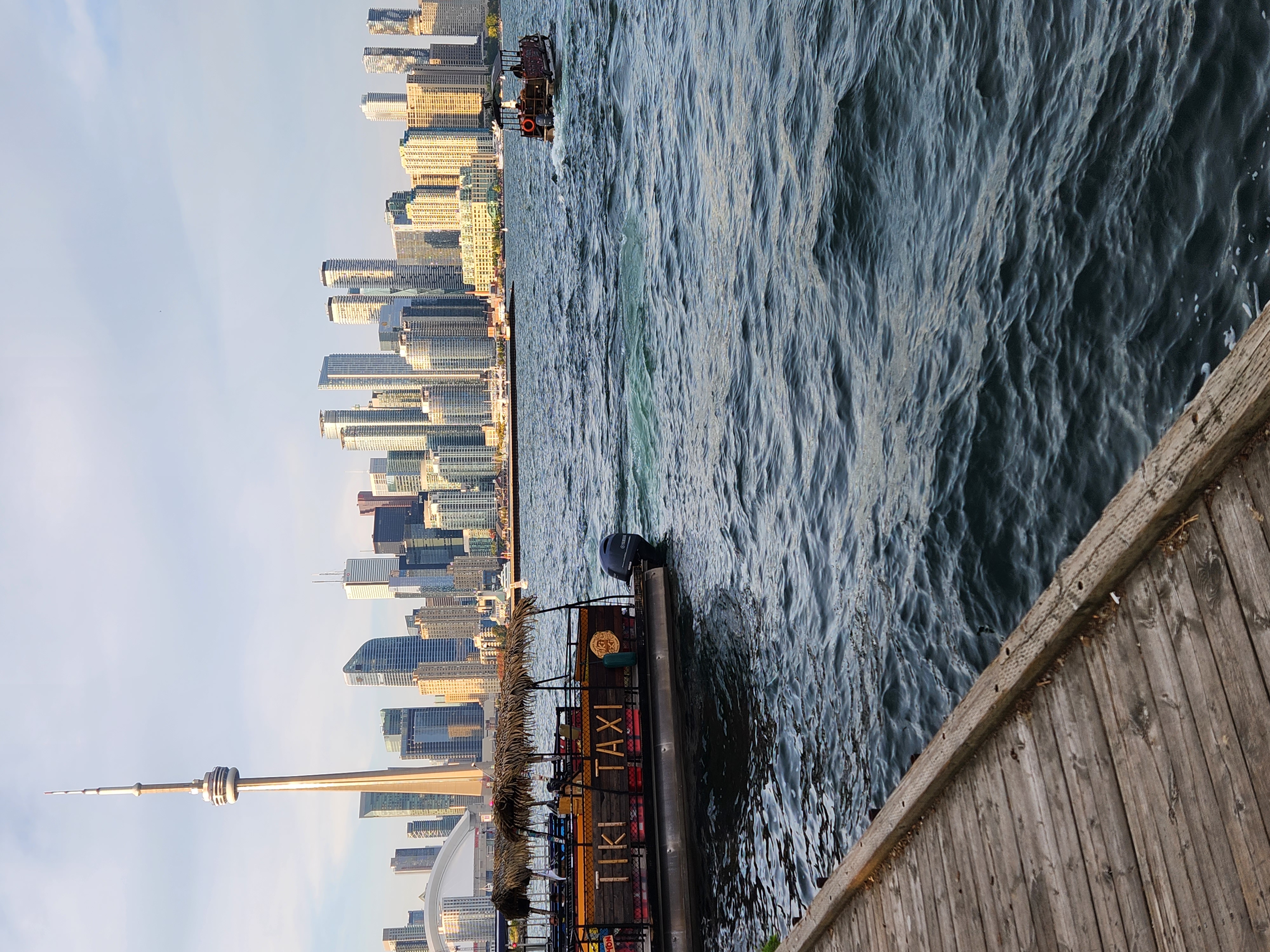
In the summer of 2026, the world will arrive on Canada’s doorstep.
For the first time in history, Canada will co-host the FIFA World Cup, the largest sporting event on the planet, a spectacle that moves millions of people across borders and injects billions into local economies. Toronto and Vancouver will become global stages, their stadiums filled with fans from Europe, Asia, the Middle East, Africa, and Latin America. Airlines will scramble to add capacity. Hotels will raise their flags. Restaurants will extend their hours. Cities will hum with the electricity of global attention.
And yet, despite this unprecedented moment, Canada risks doing what it has done too often in the tourism arena: under-market, under-price, and under-perform.
For a country with world-class landscapes, safe cities, multicultural vibrancy, and a reputation for stability, Canada attracts far fewer tourists than it should. France receives nearly 90 million visitors a year. Spain, 80 million. Even Thailand, with a population barely one-fifth of Canada’s, draws more than 35 million. Canada, by contrast, hovers around 22 million in a good year , a number that should be far higher for a G7 nation with global name recognition.
The problem is not the product. The problem is the strategy.
Canada has never embraced the aggressive, bundled, discount-driven tourism model that has powered the rise of destinations from Dubai to Singapore, from Istanbul to Seoul. It has never treated tourism as a competitive export industry , one that requires bold pricing, targeted marketing, and a willingness to sacrifice short-term margins for long-term volume.
But with the World Cup approaching, Canada has a rare chance to rewrite its playbook.
The Economics of Empty Rooms
Tourism is a business of fixed costs.
Hotels must pay for buildings, staff, utilities, maintenance, and taxes whether rooms are full or empty. Airlines must operate aircraft whether seats are sold or not. Attractions must keep their doors open regardless of foot traffic.
This is why countries with sophisticated tourism strategies understand a simple truth:
A discounted room is better than an empty room.
A discounted flight is better than an empty seat.
A discounted pass is better than an unused attraction.
The marginal cost of hosting one more tourist , cleaning a room, serving breakfast, processing a ticket , is tiny compared to the fixed cost of running the operation. Every additional visitor is almost pure profit.
This is why hotels in Spain slash prices in shoulder seasons. Why airlines in the Gulf offer promotional fares to fill cabins. Why Japan bundles rail passes, museum tickets, and hotel nights into irresistible packages for foreign visitors.
Canada, by contrast, often behaves as if tourism demand is guaranteed as if visitors will come regardless of price, convenience, or competition. But in a world where travelers can choose between Paris, Bangkok, Dubai, Seoul, Istanbul, or Vancouver, the competition is fierce and the margins are thin.
If Canada wants to win, it must compete.
The Case for a Canadian Travel Bundle
Imagine a national program ,call it Canada Explore 2026 that offers:
- Deeply discounted hotel rooms through a federal-provincial tourism partnership
- Bundled flight + hotel + attraction passes for major cities
- Seasonal summer flights to and from Europe, the Middle East, India, China, South Korea, and ASEAN capitals
- Transit passes, museum access, and event tickets included in a single package
- Aggressive marketing campaigns in London, Paris, Berlin, Dubai, Doha, Mumbai, Delhi, Seoul, Singapore, Shanghai, and Tokyo
- Special World Cup travel bundles that extend beyond match days and encourage cross-country exploration
This is not a radical idea. It is standard practice in countries that treat tourism as a strategic export.
The psychological power of bundling is enormous. Travelers perceive greater value when multiple components are packaged together, even if the actual discount is modest. A $1,500 trip that includes flights, hotels, transit, and attractions feels like a deal compared to a $1,200 flight alone.
Canada has never fully exploited this dynamic. But the World Cup gives it a perfect excuse to start.
Why Target Europe, Asia, and the Middle East
These regions represent the largest and fastest-growing pools of international travelers. They also share a set of characteristics that make them ideal targets for a Canadian tourism push:
1. A large, expanding middle class
Millions of people in India, China, Southeast Asia, and the Gulf now travel internationally every year.
2. Strong interest in cool-climate summer destinations
Canada’s summer weather is a major selling point for travelers escaping heat waves in Europe, the Middle East, and Asia.
3. High spending power
Tourists from the Gulf, East Asia, and Western Europe are among the world’s highest per-capita spenders.
4. A perception of Canada as safe, clean, and welcoming
In an era of geopolitical uncertainty, Canada’s stability is a competitive advantage.
5. Direct flight potential
Seasonal routes to Seoul, Singapore, Dubai, Doha, Mumbai, Delhi, Shanghai, and Istanbul could fill both outbound and inbound seats.
If Canada launches targeted campaigns in these markets , not generic “Visit Canada” ads, but tailored, data-driven, culturally specific messaging , it could unlock millions of new visitors.
The World Cup as a Catalyst
The FIFA World Cup is not just a sporting event. It is a global migration phenomenon.
In 2022, Qatar , a country with a population smaller than Toronto, welcomed more than 1.5 million visitors during the tournament. Dubai, Abu Dhabi, and Saudi Arabia saw spillover tourism that lasted months. Airlines added hundreds of flights. Hotels ran at near-full occupancy. Restaurants, malls, and attractions saw record revenue.
Canada will not replicate Qatar’s numbers , nor should it try. But it can replicate the strategy.
The World Cup brings:
- Guaranteed international demand
- Global media attention
- A surge in flight bookings
- A spike in hotel occupancy
- A once-in-a-generation marketing window
If Canada bundles World Cup tickets with discounted travel packages, it can convert match-day visitors into multi-city travelers. A fan flying to Toronto for a Spain-Germany match could be encouraged to spend a week exploring Montreal, Banff, Vancouver, or Halifax.
The key is to make the offer irresistible.
The Missed Opportunity of High Prices
Canada’s biggest tourism barrier is not distance. It is cost.
Flights to Canada are often significantly more expensive than flights to Europe or Asia. Hotels in major Canadian cities routinely charge premium rates even in off-peak seasons. Attractions, transit, and food are priced at levels that surprise many international visitors.
This pricing strategy may maximize short-term revenue, but it suppresses long-term volume.
Countries that dominate tourism France, Spain, Italy, Thailand, Turkey understand that volume beats margin. They price to fill capacity, not to extract maximum revenue from each visitor.
Canada must adopt the same mindset.
A National Tourism Strategy for a New Era
To capitalize on the World Cup and build a sustainable tourism boom, Canada needs a coordinated national strategy that includes:
1. Federal-provincial hotel discount programs
Hotels receive tax incentives for offering reduced rates to international visitors during peak tourism windows.
2. Airline partnerships for seasonal routes
Air Canada, WestJet, and international carriers collaborate to add summer flights to key markets.
3. City-level attraction bundles
Transit passes, museum tickets, and event access packaged into a single QR code.
4. Aggressive global marketing
Campaigns tailored to each region’s cultural preferences and travel motivations.
5. A World Cup “Beyond the Match” program
Encouraging fans to explore multiple cities and provinces.
6. A long-term tourism investment fund
Modeled after Singapore and Dubai, focusing on infrastructure, branding, and global partnerships.
This is not merely a tourism plan. It is an economic strategy.
Tourism as a Multiplier Industry
Every tourist dollar multiplies across the economy:
- Hotels
- Restaurants
- Retail
- Transportation
- Attractions
- Local taxes
- Airport fees
- Cultural institutions
A visitor who pays $120 for a discounted hotel room may spend $300 on food, $200 on shopping, $150 on attractions, and $100 on transit. The total economic impact far exceeds the initial discount.
This is why countries fight fiercely for tourism market share. It is one of the fastest, most reliable ways to inject money into local economies without building factories or negotiating trade deals.
Canada has the assets. It needs the ambition.
A Moment Canada Cannot Waste
The 2026 World Cup is more than a sporting event. It is a global spotlight , a chance for Canada to redefine itself as a competitive, welcoming, and accessible destination.
If Canada embraces bold pricing, strategic bundling, and targeted marketing, it could transform a one-month tournament into a decade-long tourism boom.
If it hesitates, the moment will pass , and the world will move on to the next host nation.
Tourism is not a passive industry. It rewards countries that act, not those that wait.
Canada has waited long enough.