How Northwestern Ontario’s Largest City Can Target a 25+ Billion USD Economy by 2050
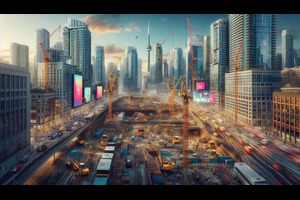
Thunder Bay’s future will be determined not only by the industries it attracts, but by the scale of the city it chooses to become. If Northwestern Ontario’s largest urban centre is to play a meaningful role in Canada’s economic landscape by mid-century, it must begin planning for a population far larger than today’s. A city of 125,000 cannot sustain the industrial, logistical, and technological ambitions required to anchor a modern regional economy. A city of 250,000 or more, however, can. Thunder Bay must begin to imagine itself not as a mid-sized administrative centre, but as a major northern metropolis, a place with the density, infrastructure, workforce, and economic gravity to drive growth across the entire region.
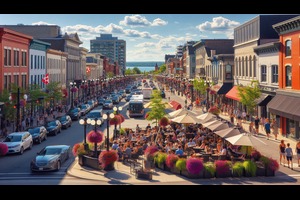
Preparing for a population of 250,000+ is not simply a demographic exercise; it is an economic strategy. Cities grow because industries grow, and industries grow where cities have the capacity to support them. Thunder Bay will need to expand housing, modernize transit, redevelop its waterfront, densify its downtown, and build new neighbourhoods designed for young families, skilled workers, and international immigrants. It will need to strengthen its cultural institutions, expand its university and hospital systems, and create the kind of urban environment that attracts talent rather than losing it to southern Ontario.
Thunder Bay stands at a pivotal moment in its history. As the largest city in Northwestern Ontario, it has long served as the region’s commercial, administrative, and medical centre,a place where government services, education, and health care anchor the local economy. For decades, this model provided stability, employment, and a predictable foundation for public life. But stability is not the same as growth, and Thunder Bay now faces a structural challenge that demands a new economic vision. If the city is to thrive in the next generation, it must shift from a public-sector-dominated economy to one powered by private-sector innovation, investment, and export-driven industries.
The question is not whether Thunder Bay can grow. The question is whether it can grow big enough and fast enough to meet the demands of a changing world. By 2050, Thunder Bay should target an economy exceeding 25 billion USD, a bold but achievable ambition if the city embraces its geographic advantages, leverages its institutional strengths, and positions itself at the centre of emerging industries that are reshaping Canada’s economic landscape. This is not a forecast,it is a strategic target, a vision for what Thunder Bay could become if it chooses to lead rather than follow.
A City Built on Public Institutions ,And Why That Must Change
Thunder Bay’s economic identity has been shaped by its major public institutions: the regional hospital, Lakehead University, Confederation College, municipal government, and provincial agencies. These employers provide thousands of jobs and form the backbone of the city’s labour market. But public-sector employment, by its nature, circulates money rather than multiplying it. It stabilizes an economy but does not scale it. It supports livelihoods but does not generate the kind of exponential growth that transforms a region.
For Thunder Bay to target a 25+ billion USD economy by 2050, it must build a private-sector engine capable of producing value, attracting investment, and exporting goods and services beyond the region. This requires a shift in mindset,from a city that administers the region to a city that drives it. Thunder Bay must become a hub of production, logistics, energy, technology, and innovation, not just a centre of public services.
The good news is that Thunder Bay has the raw ingredients for such a transformation. It has a strategic location, a deep-water port, rail connections to the continent, proximity to critical-minerals deposits, a skilled workforce, and a growing research ecosystem. What it needs now is a long-term strategy that aligns these assets with the industries of the future.
The Geography Advantage: A Gateway to the North and the World
Thunder Bay’s geography is not just a feature,it is a competitive advantage. Situated at the western edge of the Great Lakes, the city is the natural gateway between the Prairies, the Arctic, and the industrial heartland of Eastern Canada. Its port is the largest outbound grain port in North America, and its rail connections link it to major markets across the continent. In a world where supply-chain resilience is becoming a national priority, Thunder Bay’s position is more valuable than ever.
The city’s future lies in becoming a logistics and transportation powerhouse, a place where goods move efficiently from rail to ship, from mine to market, from northern communities to global destinations. This is not a theoretical opportunity,it is a practical one. With modernization, investment, and strategic planning, Thunder Bay can become one of Canada’s most important inland logistics hubs, supporting industries from agriculture to mining to manufacturing.
But logistics alone will not deliver a 25+ billion USD economy. Thunder Bay must also become a centre of production, not just movement.
Critical Minerals: The Industrial Opportunity of a Generation
The global race for critical minerals,lithium, nickel, cobalt, graphite, and rare earth elements is reshaping economic strategies around the world. Canada has declared critical minerals a national priority, and Ontario has placed the Ring of Fire at the centre of its industrial strategy. Thunder Bay is the closest major city to this vast mineral region, making it the natural staging ground for exploration, extraction, processing, and value-added manufacturing.
If Thunder Bay positions itself correctly, it can become:
- A processing and refining centre for critical minerals
- A manufacturing hub for battery components and mining equipment
- A logistics base for northern mining operations
- A research centre for clean extraction and mining automation
This sector alone could add billions to the regional economy. The key is ensuring that Thunder Bay does not simply watch minerals pass through its port but becomes a place where minerals are transformed into high-value products. Processing, refining, and manufacturing are where the real economic multipliers lie.
Energy and Industrial Power: Building the Infrastructure for Growth
No modern industrial economy can grow without reliable, affordable, and scalable energy. Thunder Bay has the land, the transmission corridors, and the industrial demand to become a centre for clean energy production. Whether through hydrogen, renewable energy, or small modular reactors (SMRs), the city can build an energy ecosystem that attracts heavy industry and supports long-term growth.
SMRs, in particular, offer a transformative opportunity. They can power industrial parks, support mining operations, and provide stable baseload energy for manufacturing. If Thunder Bay becomes an early adopter of SMR technology, it could attract industries that require large amounts of clean, reliable power,industries that create high-value jobs and export-driven GDP.
Energy is not just a utility; it is an economic strategy. Cities that control their energy future control their economic future.
Advanced Manufacturing: The Missing Piece of Thunder Bay’s Economy
Thunder Bay has a long history of manufacturing, but much of that capacity has eroded over time. To reach a 25+ billion USD economy, the city must rebuild its manufacturing base, not by replicating the past, but by embracing the industries of the future.
Thunder Bay can become a centre for:
- Mining equipment manufacturing
- Rail and transportation components
- Clean-tech systems
- Modular housing and construction technologies
- Defence and aerospace components
Manufacturing is the fastest way to scale GDP because it creates value, exports products, and supports a wide range of secondary industries. With the right incentives, Thunder Bay can attract manufacturers looking for access to minerals, energy, transportation, and land.
Health Sciences and Education: From Public Services to Innovation Engines
Thunder Bay’s hospital, medical school, and university are not just public institutions,they are potential innovation engines. With investment in research, commercialization, and partnerships, the city can build a health-sciences cluster that supports biomedical research, medical technology development, and specialized training.
This sector will not replace manufacturing or logistics, but it can complement them by creating high-skilled jobs, attracting talent, and diversifying the economy. A strong health-sciences ecosystem also supports population growth, which is essential for long-term economic expansion.
Indigenous Partnerships: The Foundation of Northern Development
Thunder Bay’s future is inseparable from the future of Indigenous communities across Northwestern Ontario. These communities are becoming major economic players, with growing influence in mining, energy, infrastructure, and tourism. True economic transformation in Thunder Bay requires deep, respectful, and mutually beneficial partnerships with Indigenous nations.
Such partnerships can unlock:
- Joint infrastructure projects
- Equity participation in mining and energy
- Indigenous-led tourism and cultural industries
- Workforce development and training
Indigenous economic development is not a side issue, it is central to the region’s future.
Population Growth: The Silent Prerequisite
No city can quadruple its economy without growing its population. Thunder Bay must aim to grow from roughly 125,000 residents today to at least 250,000+ by 2050. This requires:
- Immigration strategies
- Housing development
- Workforce training
- Quality-of-life improvements
- A strong narrative that attracts young families and skilled workers
Economic growth and population growth are inseparable. One cannot happen without the other.
A Vision for 2050: Thunder Bay as the Northern Capital of a New Industrial Era
If Thunder Bay embraces its potential, the city in 2050 could look very different from the city today. It could be a thriving industrial and logistics hub, a centre of clean energy and critical-minerals processing, a leader in advanced manufacturing, and a place where Indigenous and non-Indigenous communities build shared prosperity.
The path to a 25+ billion USD economy is not easy, but it is achievable. It requires long-term planning, bold leadership, and a willingness to embrace change. It requires shifting from a public-sector mindset to a private-sector growth model. It requires investment in infrastructure, energy, and innovation. And it requires a narrative that positions Thunder Bay not as a remote northern city, but as the capital of Northwestern Ontario’s next industrial cycle.
Thunder Bay has the assets. It has the location. It has the institutions. What it needs now is the ambition.
The next 25 years will determine whether Thunder Bay becomes a regional powerhouse or remains a stable but stagnant administrative centre. The choice is clear. The opportunity is real. And the time to act is now.