
Canada’s $35 Billion Arctic Strategy Marks a Historic Shift , but Experts Say the Real Work Is Only Beginning
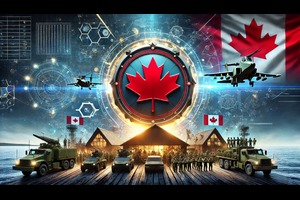
OTTAWA ,The Canadian government, led by Prime Minister Mark Carney, has unveiled a sweeping $35-billion plan to strengthen Arctic security and modernize northern infrastructure, a generational investment that officials describe as the most ambitious northern strategy in the country’s history. Announced as part of Budget 2025, the plan signals a decisive shift in how Canada views its northern frontier , not as a remote expanse, but as a strategic domain central to national sovereignty, global stability, and the country’s long-term economic future.
The initiative focuses on dual-use infrastructure , airstrips, ports, energy systems, and communications networks designed to serve both military and civilian needs across the Arctic. But behind the headline number lies a deeper transformation: a recognition that Canada’s decades-long underinvestment in the North is no longer tenable in an era of rising geopolitical competition, accelerating climate change, and rapidly evolving military technology.
For years, defence analysts, northern communities, and international partners have warned that Canada’s Arctic capabilities lag far behind those of other circumpolar nations. Now, with global tensions rising and the Arctic emerging as a new arena of strategic competition, Ottawa is moving to close the gap. Yet experts caution that the $35-billion plan, while historic, represents only the first step in what must become a sustained, multi-decade national project.
A Region at the Center of Global Change
The Arctic is warming at nearly four times the global average, opening new shipping routes, exposing untapped natural resources, and drawing increased interest from global powers. Russia has expanded its northern military footprint dramatically over the past decade, while China has declared itself a “near-Arctic state” and invested heavily in polar research, icebreakers, and satellite systems.
Against this backdrop, Canada , home to the world’s longest Arctic coastline , faces mounting pressure to assert its sovereignty and modernize its defences. The new plan acknowledges this reality, but analysts say the country must go further.
“Canada has reached a turning point,” said one senior defence official who was not authorized to speak publicly. “The Arctic is no longer a distant frontier. It is a strategic theatre, and we need to treat it as such.”
A Call for Long-Term Budget Commitment
While the $35-billion investment is significant, defence economists warn that Arctic security cannot be addressed through one-time spending. The region’s vastness, harsh climate, and infrastructure gaps require predictable, long-term funding that extends well beyond a single budget cycle.
Several former military commanders argue that Canada must commit a dedicated portion of future federal budgets to Arctic operations, infrastructure, and research , a structural shift similar to the long-term defence planning frameworks used by Nordic allies.
“Short-term spending won’t solve long-term challenges,” said a retired general who previously led Arctic operations. “We need a 20-year plan, not a two-year plan.”
A Year-Round Military Presence: 10,000 Soldiers for the North
One of the most striking recommendations emerging from defence circles is the establishment of a 10,000-soldier rotational force dedicated to Arctic operations. Such a force would provide Canada with a year-round presence capable of:
- conducting sovereignty patrols
- responding to emergencies
- supporting northern communities
- monitoring air and maritime approaches
- training for extreme-climate operations
Currently, Canada relies heavily on part-time deployments and seasonal exercises, leaving large portions of the Arctic unmonitored for much of the year.
A permanent or rotational force, analysts say, would mark a profound shift in Canada’s ability to defend its northern territory and contribute meaningfully to continental defence.
Modernizing Surveillance: Drones, Radar, and Satellites
The government’s plan includes funding for modern surveillance systems, but experts argue that Canada must accelerate investment in several key technologies.
1. Domestic Drone Manufacturing
Drones are rapidly becoming essential tools for Arctic surveillance, search-and-rescue, and environmental monitoring. Canada currently relies heavily on foreign suppliers, a vulnerability highlighted by global supply chain disruptions.
A domestic drone industry, analysts say, would:
- create high-tech jobs
- reduce reliance on foreign systems
- allow customization for Arctic conditions
- strengthen national security
2. Next-Generation Radar Systems
Canada’s existing radar network, much of it built during the Cold War, is not designed to detect modern threats such as hypersonic missiles or low-flying cruise missiles.
Upgrading to next-generation over-the-horizon radar is considered essential for both Arctic and continental defence.
3. Satellite Surveillance and Space Infrastructure
Canada has long been a leader in space-based radar, but its satellite constellation is aging. Without new investment, the country risks losing one of its most important strategic advantages.
Experts say Canada must prioritize:
- new Earth-observation satellites
- space-based radar systems
- secure Arctic communications
- partnerships with domestic space startups
This requires increased funding for the Canadian Space Agency and a more deliberate effort to integrate private space companies into national defence planning.
Integrating Industry, Universities, and Defence
One of the most persistent criticisms of Canada’s defence ecosystem is its fragmentation. Unlike the United States or several European allies, Canada lacks a cohesive framework linking:
- private aerospace and defence companies
- universities and colleges
- federal research labs
- emerging tech firms
The result is a patchwork of disconnected initiatives rather than a unified innovation strategy.
Defence economists argue that Canada must build a national defence innovation network, enabling collaboration on:
- advanced materials
- autonomous systems
- Arctic-resilient technologies
- space systems
- AI-enabled surveillance
- next-generation communications
Such a network would not only strengthen national security but also position Canada as a global leader in emerging technologies.
A Dedicated Arctic Security Program
Several policy experts have called for the creation of a permanent Arctic Security Program, a centralized institution responsible for coordinating:
- infrastructure development
- military operations
- research and innovation
- Indigenous partnerships
- environmental monitoring
- procurement and logistics
The Arctic’s unique challenges , extreme weather, vast distances, limited infrastructure, and the need for close collaboration with Indigenous communities , require a specialized, long-term approach.
A dedicated program, analysts say, would ensure continuity across governments and budget cycles.
Rebuilding the Basics: Ammunition and Industrial Capacity
Beyond advanced technologies, Canada faces a more fundamental challenge: the country lacks the industrial capacity to produce basic munitions at scale.
The war in Ukraine has exposed global shortages of 155-millimetre NATO-standard artillery shells, a cornerstone of modern land warfare. Canada currently relies almost entirely on foreign suppliers.
Defence officials argue that Canada must prioritize:
- a domestic ammunition factory
- secure supply chains for explosives and propellants
- partnerships with allied defence manufacturers
Rebuilding this industrial base would not only strengthen national security but also create skilled manufacturing jobs across the country.
Economic Opportunity Meets Strategic Necessity
Supporters of the Arctic plan argue that if Canada executes it properly, by aligning defence needs with industrial strategy, research, and northern development , the country could generate thousands of jobs while strengthening its role within NATO.
The potential economic benefits include:
- high-tech manufacturing jobs
- growth in aerospace and defence sectors
- expansion of the domestic space industry
- new opportunities for northern communities
- increased global competitiveness
“Security and economic development are not competing priorities,” said a senior government official. “In the Arctic, they are the same priority.”
A Turning Point for Canada
The $35-billion Arctic plan marks a dramatic shift in tone and ambition. For decades, Canada’s northern strategy has been characterized by incrementalism and underinvestment. Now, faced with a rapidly changing geopolitical landscape, the country appears ready to take a more assertive role.
But the real test will come in the years ahead. The Arctic is a region where infrastructure takes decades to build, where climate conditions challenge even the most advanced technologies, and where sovereignty must be asserted continuously, not episodically.
To succeed, Canada will need:
- sustained funding
- political consensus
- industrial capacity
- technological innovation
- strong partnerships with Indigenous communities
- deep integration with allies
The $35-billion plan is a beginning , a significant one , but experts say it must evolve into a multi-decade national project that reshapes how Canada defends its territory, develops its economy, and positions itself in an increasingly uncertain world.
For now, the country stands at a crossroads. The decisions made in the coming years will determine whether Canada emerges as a leader in Arctic security and innovation , or continues to play catch-up in a region that is becoming more strategically important by the day.